So How Much Does It Cost to Run Air Conditioning at Home? (UK 2026 Guide)
One of the most common questions we hear from homeowners in Bradford and the surrounding areas, is “How Much Does It Cost to Run Air Conditioning at Home?”
check out our installation page for Air conditioning
or
if you need a quote for a new Air conditioning unit Click/Tap here
The good news is that modern air conditioning systems are far more energy efficient than many people realise. Thanks to advances in inverter technology, today’s systems use only the amount of electricity needed to maintain your chosen temperature rather than constantly switching on and off at full power.
In fact, for many households, the daily running cost is less than they expect, particularly when compared with other electrical appliances around the home.
In this guide, we’ll explain what affects running costs, provide real-life examples, and share practical tips to help keep your energy bills as low as possible.
The Short Answer
The cost of running a domestic air conditioning system will depend on several factors, including:
- The size of the air conditioning unitthis wibb listed in kilowatts(kw)
- The efficiency rating of the system
- The outside temperature when it is working
- The temperature you set indoors (the coolest setting will be more expensive to run)
- How well your home is insulated
- How many hours you use it each day
- Your electricity tariff
For an average UK home, a modern split air conditioning system can typically cost between 15p and 50p per hour to run once it has reached the desired temperature.
This means that if you use your air conditioning for six hours on a warm summer’s day, it may only cost around £1 to £3 depending on your system and electricity prices.
Understanding Power Consumption In Air Conditioning
Many people assume that a larger air conditioning unit uses huge amounts of electricity, but that’s not quite how they work.
Every air conditioning unit has two figures:
- Cooling output (kW) – how much heating or cooling it can produce.
- Electrical input (kW) – how much electricity it actually consumes.
For example:
A 3.5kW air conditioning unit does not normally use 3.5kW of electricity.
Instead, it may only consume around 0.8 to 1.1kW under normal operating conditions.
This is because modern heat pump technology moves heat rather than creating it, making it extremely energy efficient.
Example Running Costs Of Air Conditioning At Home
Let’s assume an electricity price of 30p per kWh.
Small Bedroom Unit (2.5kW)
Typical electrical input:
0.7kW
Running cost:
0.7 × 30p = 21p per hour
If used for:
- 4 hours = 84p
- 6 hours = £1.26
- 8 hours = £1.68
Medium Living Room Unit (3.5kW)
Typical electrical input:
0.9kW
Running cost:
0.9 × 30p = 27p per hour
Used for six hours:
Approximately £1.62
Large Open Plan Room (5kW)
Typical electrical input:
1.5kW
Running cost:
1.5 × 30p = 45p per hour
Six hours of use:
Around £2.70
Remember, these figures are examples. Once your room reaches the target temperature, the compressor slows down, so the average running cost is often lower than these simple calculations suggest.
Why Todays Modern Inverter Air Conditioning Systems Save You Money
Older air conditioning systems worked much like a traditional electric heater.
They switched fully on…
Reached temperature…
Switched completely off…
Then repeated the cycle over and over again.
Modern inverter systems work differently.
Instead of stopping and starting constantly, they slow the compressor down and only use enough electricity to maintain the room temperature.
This means:
- Lower electricity bills
- More consistent temperatures
- Quieter operation
- Less wear on components
- Longer equipment life
It’s one of the main reasons modern air conditioning systems are significantly cheaper to run than older models.
Does It Cost More To Run During a Heatwave?
Usually, yes.
When outside temperatures rise into the high 20s or above, the outdoor unit has to work harder to remove heat from your home.
The hotter it is outside:
- the longer the compressor runs
- the harder it works
- the more electricity it uses
However, because inverter systems adjust automatically, they remain highly efficient even during very warm weather.
Does Leaving The Air Conditioning At Home On Cost Less?
Many homeowners ask whether they should switch the system off when they leave the room.
The answer depends on how long you’ll be away.
If you’re leaving for 20 to 30 minutes, it can sometimes be more efficient to leave the system running at the set temperature rather than allowing the room to heat up significantly and then asking the unit to cool it all down again.
If you’re going out for several hours, switching it off will usually save more electricity.
Many modern systems also include timers, scheduling features and smartphone apps, allowing you to switch the unit on shortly before arriving home.
Air Conditioning Can Be Cheaper Than You Think
Many people compare air conditioning with electric fan heaters.
The difference is enormous.
An electric fan heater converts electricity directly into heat.
A heat pump air conditioner moves heat instead.
This means an air conditioning system can often produce 3 to 5kW of heating from just 1kW of electricity.
This efficiency is measured using figures known as the Coefficient of Performance (COP) and Seasonal Coefficient of Performance (SCOP).
In simple terms, you’re getting several units of heat for every unit of electricity you buy.
That’s why air conditioning is increasingly being used as a primary heating source during spring, autumn and even much of winter.
What Increases Running Costs?
Several factors can increase electricity use.
Poor insulation
If your home loses heat or gains heat quickly, the system has to work harder.
Doors and windows left open
Air conditioning works best in enclosed rooms.
Leaving windows open allows warm air to continually enter.
Dirty filters
Blocked filters reduce airflow and force the system to work harder.
Fortunately, they’re usually very easy to clean on a service.
Incorrect sizing
An undersized system runs continuously trying to cool the room.
An oversized system can cycle more than necessary and may not remove humidity as effectively.
A professional survey helps ensure the correct unit is selected for your room.
Ways to Reduce Running Costs
Keeping costs low is surprisingly easy.
Here are a few simple tips:
- Set the temperature around 19–22°C for cooling rather than choosing the coldest setting.
- Keep doors and windows closed while the system is operating.
- Close blinds or curtains during the hottest part of the day to reduce solar heat gain.
- Clean or wash the filters regularly following the manufacturer’s guidance.
- Arrange annual servicing to maintain efficiency and reliability.
- Use timers or smartphone controls so the unit only operates when needed.
- Choose a high-efficiency inverter model when installing a new system.
Small adjustments can make a noticeable difference over the course of the summer.
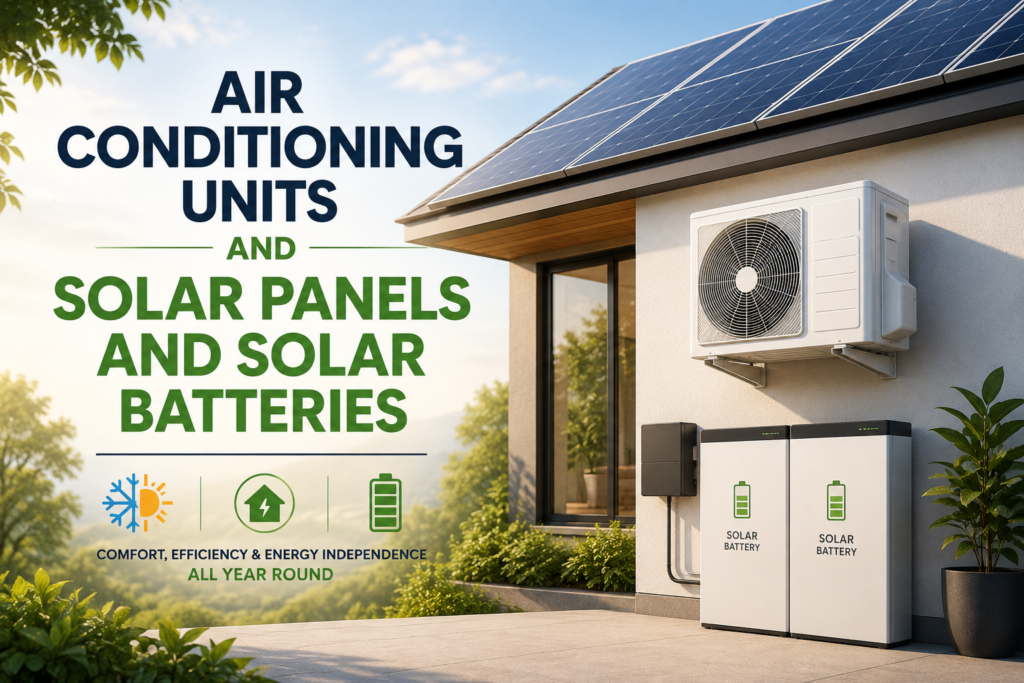
What If You Have Solar Panels?
If your home has solar panels, running costs can be even lower.
During sunny weather—when air conditioning is most likely to be needed—your solar panels are often generating their highest output.
Instead of exporting excess electricity to the grid, you can use that energy to cool your home.
If you also have battery storage, you may be able to run your air conditioning into the evening using electricity stored earlier in the day, further reducing your reliance on the grid.
For many homeowners, solar panels and air conditioning are an excellent combination, providing greater comfort while helping to keep energy costs under control.
Is Air Conditioning Worth the Cost?
For most homeowners, the answer is yes.
Modern air conditioning doesn’t just cool your home.
It also:
- Removes excess humidity.
- Improves indoor comfort during hot weather.
- Filters dust and airborne particles.
- Provides efficient heating during colder months.
- Can help create a better sleeping environment on warm nights.
- Offers year-round climate control from a single system.
When you consider the relatively low running costs alongside these benefits, many homeowners find that air conditioning is a worthwhile investment.
Final Thoughts
Modern air conditioning systems are far more affordable to run than many people expect. A typical domestic unit may cost as little as 20–30p per hour under normal conditions, with exact costs depending on the size of the system, your electricity tariff and how you use it.
Choosing the correct size unit, keeping it well maintained and using sensible temperature settings will all help maximise efficiency and minimise running costs. If your home has solar panels or battery storage, the cost of staying comfortable can be even lower.
If you’re thinking about installing air conditioning in your home, professional advice can help you choose a system that’s correctly sized for your property, ensuring you enjoy reliable, efficient heating and cooling for many years to come.